
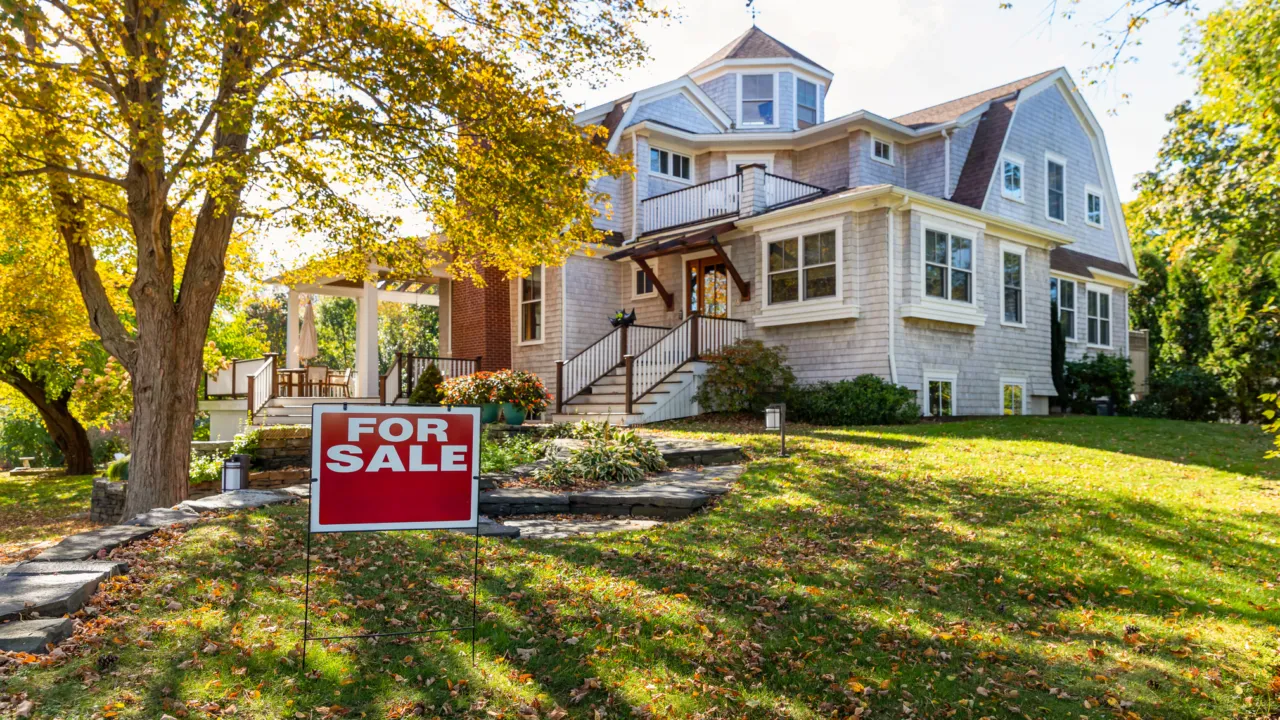

Can You Sell a House in Foreclosure? (Yes — Here’s How)
Yes, you can sell a house in foreclosure — at any point from the first missed payment through the day before the scheduled sale. Selling before the foreclosure is completed lets you pay off the mortgage, protect your credit from the full damage of a completed foreclosure, and keep whatever equity remains in the property. Byrd and Co buys homes in active foreclosure across 15 states, closing in as few as 7 days before the sale date, with zero fees to the homeowner.
Table of Contents
- At What Stage of Foreclosure Can You Still Sell?
- What Happens to Your Mortgage When You Sell During Foreclosure?
- How Is Selling During Foreclosure Different from a Short Sale?
- How Does Selling to a Cash Buyer Stop the Foreclosure?
- Does Selling Before Foreclosure Protect Your Credit?
- What If You Owe More Than the Home Is Worth?
- How Your State’s Foreclosure Process Affects Your Timeline
- FAQ
At What Stage of Foreclosure Can You Still Sell?
You can sell at every stage. But the earlier you act, the more options — and more time — you have.
Stage 1: Missed payments (pre-foreclosure). You’re behind on payments but your lender hasn’t filed anything yet. This is the best time to sell. You have maximum flexibility on price, timing, and method. You could list traditionally, sell to a cash buyer, or negotiate with your lender.
Stage 2: Notice of Default or pre-foreclosure notice received. Your lender has formally notified you of their intent to foreclose. In most states, this starts a clock — 90 days in some, 120 in others, as few as 60 in nonjudicial states. You can still sell, but the window is narrower. A cash sale is typically the fastest path at this stage.
Stage 3: Foreclosure lawsuit filed or Notice of Sale recorded. In judicial states (New York, New Jersey, Ohio, Pennsylvania, Kentucky, Connecticut, Massachusetts), a lawsuit has been filed in court. In nonjudicial states (Virginia, Arizona, Tennessee, Colorado), a trustee’s sale has been scheduled. You can still sell, but you need a buyer who can close before the court date or sale date. This is where cash buyers become essential — a financed buyer simply can’t close fast enough.
Stage 4: Days before the sale. Even with a sheriff’s sale, trustee’s sale, or Commissioner’s Sale on the calendar, selling is still possible — but the window is measured in days, not weeks. Byrd and Co has closed deals within days of a scheduled sale. If you’re at this stage, call (410) 855-1722 immediately. Every day matters.
The critical point: your right to sell exists until the sale is completed and confirmed by the court or trustee. After that, ownership has transferred and selling is no longer an option.
What Happens to Your Mortgage When You Sell During Foreclosure?
The mortgage gets paid off at closing — the same way it would in any traditional sale.
When you sell your home, the title company requests a payoff statement from your lender. At the closing table, the title company uses the sale proceeds to pay off the remaining mortgage balance, any accrued interest, and any late fees directly to the lender. You receive whatever cash remains after the payoff.
Here’s a simplified example:
| Amount | |
|---|---|
| Cash offer from Byrd and Co | $250,000 |
| Remaining mortgage balance | $210,000 |
| Accrued interest and late fees | $3,500 |
| Closing costs (Byrd and Co covers) | $0 |
| Cash to seller at closing | $36,500 |
The moment the mortgage is paid off, the foreclosure proceeding ends. Your lender has no reason to continue the process because the debt has been satisfied. No auction. No court judgment. No deficiency.
If you want to understand the full cash sale process, read our guide: What is a cash offer on a house and how does it work?.
How Is Selling During Foreclosure Different from a Short Sale?
These are two different situations, and the difference matters.
Selling during foreclosure (standard sale): You sell for an amount that covers your full mortgage payoff. The lender is paid in full, the foreclosure ends, and you keep any remaining equity. This is possible when your home is worth more than you owe — which is the case for most homeowners who bought before 2022 and have built equity.
Short sale: You sell for less than what you owe on the mortgage, and the lender agrees to accept the reduced amount as full satisfaction of the debt. Short sales require lender approval, which can take months. The lender may also pursue a deficiency judgment for the remaining balance (depending on the state) and the short sale appears on your credit report.
| Standard Sale During Foreclosure | Short Sale | |
|---|---|---|
| Home value vs. mortgage | Home worth more than owed | Home worth less than owed |
| Lender approval needed | No | Yes — can take months |
| Timeline | 7-14 days (cash sale) | 60-120+ days |
| Credit impact | Standard sale on record | Short sale on record (less severe than foreclosure, but still negative) |
| Deficiency risk | None — mortgage paid in full | Possible — depends on state law and lender agreement |
| Seller receives cash | Yes — the difference between sale price and payoff | Rarely — most short sales leave the seller with nothing |
For most homeowners facing foreclosure, a standard cash sale to a company like Byrd and Co is faster, simpler, and leaves more money on the table than a short sale. Short sales are only relevant when the homeowner is genuinely underwater — owing more than the property is worth.
How Does Selling to a Cash Buyer Stop the Foreclosure?
A cash buyer stops the foreclosure by eliminating the condition that caused it: the unpaid debt.
When you accept a cash offer and close the sale, the title company pays off your mortgage in full from the proceeds. Once the lender receives the full payoff, there is no remaining debt to foreclose on. The lender’s attorney withdraws the foreclosure case (in judicial states) or the trustee cancels the scheduled sale (in nonjudicial states).
This is different from loan modification, forbearance, or other workout options that keep the debt in place. A cash sale eliminates the debt permanently.
The speed advantage is what makes cash buyers uniquely suited for foreclosure situations. A traditional financed buyer needs 30 to 60 days to close — and their deal can still fall apart if their loan is denied. A cash buyer like Byrd and Co can close in 7 days. When a sale date is two weeks away, that speed difference is the difference between keeping your equity and losing it at auction.
Visit Byrd and Co’s foreclosure prevention page for a full breakdown of how the process works, or call (410) 855-1722 to discuss your specific situation.
Does Selling Before Foreclosure Protect Your Credit?
Selling before the foreclosure is completed provides significantly better credit outcomes than letting the foreclosure go through.
A completed foreclosure typically drops a credit score by 100 to 160 points and stays on the credit report for 7 years. During that period, qualifying for a new mortgage, car loan, or even some rental applications becomes much more difficult.
When you sell the home before the foreclosure sale is completed, the transaction appears on your credit report as a standard home sale — not a foreclosure. The missed mortgage payments leading up to the sale will still appear, and those do affect your score. But avoiding the completed foreclosure itself is the critical difference. According to CFPB guidance, the credit recovery timeline is significantly shorter for homeowners who resolve the default before the foreclosure is finalized.
The sooner you sell, the fewer missed payment entries accumulate — and the faster your credit recovers.
What If You Owe More Than the Home Is Worth?
If your remaining mortgage balance exceeds your home’s current market value, selling at a price that fully pays off the lender isn’t possible without additional funds. In this situation, you have a few options:
Bring cash to closing. If the gap is small (a few thousand dollars), some homeowners choose to pay the difference out of pocket to avoid the foreclosure entirely.
Negotiate a short sale. Contact your lender’s loss mitigation department and request approval to sell for less than the payoff amount. The lender may agree to forgive the remaining balance — or they may retain the right to pursue a deficiency judgment depending on your state’s laws.
Explore loan modification or forbearance. If you want to keep the home, contact a HUD-approved housing counselor to discuss modification options with your lender.
Consult with Byrd and Co anyway. Even in negative equity situations, our team can assess your specific circumstances and tell you honestly what your options are. Sometimes the numbers work differently than homeowners expect — especially when factoring in the costs of continuing to make payments on a depreciating asset. Call (410) 855-1722 for an honest conversation.
How Your State’s Foreclosure Process Affects Your Timeline
The amount of time you have to sell depends heavily on which state your property is in. Foreclosure processes fall into two categories — judicial and nonjudicial — and the timeline difference is dramatic.
Judicial foreclosure states (slower — more time to act):
| State | Process | Typical Timeline |
|---|---|---|
| New York | Supreme Court filing, mandatory settlement conference | 15 months to 4 years |
| New Jersey | Superior Court filing | 1 to 2+ years |
| Ohio | County court filing, sheriff’s sale | 6 to 10 months |
| Pennsylvania | Court of Common Pleas, sheriff’s sale | 6 to 12+ months |
| Connecticut | Strict foreclosure — court sets “law day” | 6 to 12 months |
| Kentucky | Circuit Court, Commissioner’s Sale | 6 to 12+ months |
| Massachusetts | Both judicial and power of sale | 3 to 8 months |
| Florida | Circuit Court, lis pendens | 6 to 12 months |
| Indiana | Circuit/Superior Court, sheriff’s sale | 8 to 10 months |
| Delaware | Superior Court, Scire Facias | 6 to 12+ months |
Nonjudicial foreclosure states (faster — less time to act):
| State | Process | Typical Timeline |
|---|---|---|
| Virginia | Trustee sale, 60-day notice | 2 to 4 months |
| Arizona | Public Trustee, 91-day minimum | 3 to 4 months |
| Tennessee | Power of sale, 30-day notice | 2 to 3 months |
| Colorado | Public Trustee, 110-125 days | 3 to 4 months |
Maryland uses a quasi-judicial process with Order to Docket and optional mediation, typically taking 3 to 6 months.
Regardless of your state, Byrd and Co can close before your sale date. We serve homeowners facing foreclosure across all 15 states — see our full areas we serve page for details.
Frequently Asked Questions
Q: Will my lender let me sell the house while I’m in foreclosure?
Your lender cannot stop you from selling your property during foreclosure. You retain the right to sell at any point until the foreclosure sale is completed and confirmed. In fact, most lenders prefer a standard sale to a foreclosure because they recover the full loan balance without the legal costs and timeline of the foreclosure process. You don’t need your lender’s permission to sell — you only need their payoff statement, which the title company requests as part of the closing process.
Q: Can I sell my house in foreclosure without a real estate agent?
Yes. Selling directly to a cash buyer like Byrd and Co doesn’t require a real estate agent. This eliminates the 5-6% agent commission (which on a $300,000 home is $15,000-$18,000), speeds up the process, and removes the uncertainty of waiting for a buyer on the open market. In a foreclosure timeline, the speed and certainty of a direct cash sale are often more valuable than the potentially higher price an agent might achieve over several months.
Q: How do I know if I have enough equity to sell before foreclosure?
Check your most recent mortgage statement for the remaining balance. Then look up recent comparable sales in your neighborhood (Zillow and Redfin both show recent sales for free). If your home’s estimated value exceeds your mortgage balance, you have equity — and selling before foreclosure lets you keep it. If you’re unsure, call Byrd and Co at (410) 855-1722. We’ll give you an honest assessment of your equity position within 24 hours, at no cost.
Q: What if the foreclosure sale is next week — is it too late?
It may not be too late. Byrd and Co has closed deals within days of a scheduled sheriff’s sale, trustee’s sale, and Commissioner’s Sale. The tighter the timeline, the fewer options remain — but a cash sale can sometimes be coordinated even with just days to spare. Call (410) 855-1722 immediately if your sale date is imminent. Do not assume it’s too late without checking.
Facing Foreclosure? Byrd and Co Can Help.
Every day you wait narrows your options. Byrd and Co buys homes in active foreclosure across 15 states, closing in as few as 7 days with zero fees to the homeowner. One call gives you a clear picture of your options — whether that’s a cash offer, a recommendation, or an honest assessment that a different path might serve you better.
Get Your Cash Offer → | Call (410) 855-1722