
Foreclosure Filings Are Rising in 2026 — And Three of Our States Are Feeling It Most
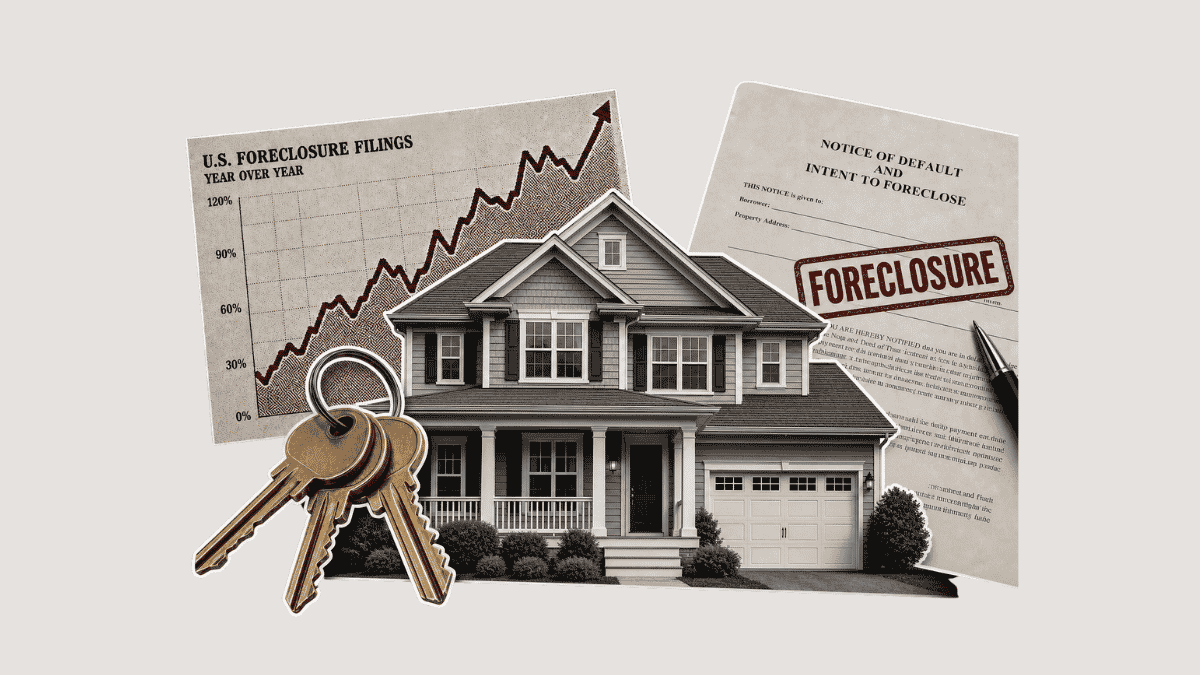
Foreclosure filings rose 21% nationwide in the first half of 2026 compared to the same period last year, according to ATTOM, the property data firm that tracks foreclosure activity across more than 3,000 U.S. counties. The increase isn’t isolated to one region — Maryland, Delaware, and Virginia, three states in Byrd and Co’s service area, all showed up among the states with the highest foreclosure activity or repossession counts in ATTOM’s most recent monthly report.
Table of Contents
- How Much Have Foreclosures Actually Increased in 2026?
- Is This a Return to 2008, or Something Different?
- Where Do Maryland, Delaware, and Virginia Rank?
- Why Are Foreclosures Climbing While Home Prices Stay High?
- What Are Your Options If You’re Behind on Your Mortgage?
- How Fast Does Foreclosure Actually Move?
- FAQ
How Much Have Foreclosures Actually Increased in 2026?
According to ATTOM’s Mid-Year 2026 U.S. Foreclosure Market Report, 227,548 U.S. properties had a foreclosure filing in the first six months of 2026 — default notices, scheduled auctions, or bank repossessions. That’s up 21% from the same period in 2025 and up 28% from 2024.
The trend has continued into the second half of the year. ATTOM’s July 2026 report showed 39,906 properties with filings, up 10% from July 2025, with completed foreclosures (REOs) climbing 23% year over year to 4,764.
Is This a Return to 2008, or Something Different?
Despite the climbing numbers, ATTOM’s own data puts this in perspective: foreclosure activity remains well below pre-2008 levels, and even below pre-pandemic norms in most markets. ATTOM CEO Rob Barber described the first half of 2026 as “a market that is gradually returning to more typical patterns” rather than a crisis unfolding.
What’s driving the increase isn’t a repeat of the subprime mortgage crisis — it’s a slower, more gradual buildup tied to years of pandemic-era forbearance programs winding down, combined with today’s elevated mortgage rates and rising ownership costs like insurance and property taxes making it harder for stretched homeowners to catch up once they fall behind.
Where Do Maryland, Delaware, and Virginia Rank?
ATTOM’s July 2026 data shows three of Byrd and Co’s service states appearing in the national rankings:
- Delaware posted the fourth-worst state foreclosure rate in the country in July 2026, with one filing for every 2,579 housing units.
- Maryland recorded the fourth-highest number of completed foreclosures (REOs) of any state in July, with 272 properties repossessed.
- Virginia ranked fifth nationally for completed foreclosures, with 263 properties repossessed in the same month.
None of the three cracked the very worst rates nationally — Nevada, South Carolina, and Florida led those rankings — but all three showing up in ATTOM’s monthly top five is a signal worth paying attention to if you’re a homeowner in the Mid-Atlantic falling behind on payments.
Why Are Foreclosures Climbing While Home Prices Stay High?
It seems counterintuitive: home values are near record highs, yet more homeowners are falling into foreclosure. The two trends aren’t actually in conflict. Rising values mean most homeowners who fall behind still have equity, which is often exactly why a cash sale is a viable exit rather than a forced auction.
What’s pushing more homeowners toward delinquency in the first place is the combined weight of higher mortgage rates on any recent refinance or adjustable-rate loan, rising homeowners insurance premiums, and property tax increases tied to those same record-high home values. A homeowner can be sitting on substantial equity and still struggle to make the monthly payment.
What Are Your Options If You’re Behind on Your Mortgage?
If you’ve missed payments or received a notice from your lender, you generally have more options the earlier you act:
- Contact your servicer directly to ask about a repayment plan, forbearance, or loan modification before a formal foreclosure filing is made.
- Talk to a HUD-approved housing counselor, which is a free service that can help you understand your options and communicate with your lender.
- Sell before the foreclosure process completes. If you have equity, a sale — traditional or cash — can pay off the loan and preserve what you’ve built, rather than losing it in a foreclosure auction.
- Understand your state’s timeline. Foreclosure procedures and notice requirements vary by state, so knowing your state’s process helps you understand how much time you realistically have.
How Fast Does Foreclosure Actually Move?
Foreclosure timelines have been shrinking. ATTOM’s mid-year data showed average foreclosure timelines fell to 563 days, the shortest average since 2013 — meaning the window between a missed payment and a completed foreclosure has been narrowing across much of the country.
That shrinking timeline is exactly why acting early matters. A homeowner who waits to see what happens loses options every month that passes, while a homeowner who sells before the process advances too far typically keeps far more of their equity.
Behind on Payments and Not Sure What to Do Next?
Byrd and Co buys houses as-is, often closing in one to two weeks, which can be fast enough to sell before a foreclosure completes. We work directly with homeowners across Maryland, Delaware, New York, Virginia, Connecticut, Massachusetts, New Jersey, Arizona, Pennsylvania, Colorado, Kentucky, and Tennessee.
Get Your Cash Offer → | Call (443) 251-3479
Frequently Asked Questions About Rising Foreclosures in 2026
Are foreclosures really increasing, or is this normal fluctuation? They’re increasing on a year-over-year basis — up 21% in the first half of 2026 per ATTOM — but the overall volume remains well below pre-2008 and even pre-pandemic levels, so this is a gradual normalization rather than a crisis spike.
Does Maryland or Virginia have one of the worst foreclosure rates in the country? Not the worst overall — Nevada, South Carolina, and Florida led the nation in July 2026 — but Delaware placed fourth for foreclosure rate, and Maryland and Virginia both placed in the top five for completed foreclosures (REOs) that same month.
If I have equity in my home, can I still lose it to foreclosure? Yes, if the process completes without action, foreclosure can wipe out your equity regardless of how much you have. Selling before the process finishes is generally the best way to protect that equity.
How much time do I have once I fall behind on payments? It varies by lender, loan type, and state, but ATTOM’s data shows average foreclosure timelines have shortened to 563 days nationally — the fastest pace since 2013 — so acting early gives you meaningfully more options.
Can I sell my house if I’m already behind on my mortgage? Yes. As long as the sale proceeds cover what’s owed on the loan (or you work out the shortfall with your lender), you can sell a home even while behind on payments, and doing so before a foreclosure completes generally preserves more of your equity than letting the process run its course.